Philosophy, Science and Religion: Religion and Science

by

Coursera

This course on Philosophy, Science and Religion: Religion and Science teaches Philosophy, Science and Religion: Religion and Science fundamentals through interactive modules. If you are , then this course is for you. You can access this course on web and mobile, it’s available in language.

#1

See all ranking

Philosophy, Science and Religion: Religion and Science

by

Coursera

This course on Philosophy, Science and Religion: Religion and Science teaches Philosophy, Science and Religion: Religion and Science fundamentals through interactive modules. If you are , then this course is for you. You can access this course on web and mobile. This complete course is available in language.

#1

See all ranking

with Certifications

26+ Hours

of Recorded Content

4.7 Rated

by 22410 Learners

Language

with Certifications

26 + Hours

of Recorded Content

4.7 Rated

by 22410Learners

Read all Reviews

Language

What's in it for You?

Online-Live-Video-Class-FILEminimizer-removebg-preview 1

Key Features:

Learn new concepts from professionals in the field.
Acquire a basic understanding of a topic or skill
Gain practical project experience to enhance employability.
Obtain a career certificate that can be shared.

Topics you will learn

  • Introduction to the Course
    • 1 video
      1. Introduction with Mark Harris
    • 3 readings
      1. About this course
      2. Course assessments and exercises
      3. Course Textbook
    • 1 discussion prompt
      1. Get to Know Your Classmates
  • Science, Religion and the Origins of the Universe
    • 6 videos
      1. The Origins of the Cosmos: Religious Accounts
      2. The Origins of the Cosmos: Philosophical Accounts
      3. The Origins of the Cosmos: Scientific Accounts
      4. The Structure of the Universe
      5. The End of the Universe
      6. Structure and Design
    • 1 reading
      1. What provides a better explanation for the origin of the universe: science or religion?
    • 5 quizzes
      1. Quiz on lecture 1
      2. Quiz on lecture 2
      3. Quiz on lecture 3
      4. Quiz on lecture 4
      5. Quiz on lecture 5
    • 1 peer review
      1. Which, if any, of the mythological accounts of the structure of the universe does current science support? Explain your answer.
    • 2 discussion prompts
      1. Other origin myths?
      2. Does current science support the idea that our universe was designed?
  • BUDDHISM AND SCIENCE
    • 9 videos
      1. The History and Geography of Buddhism
      2. Some Basic Buddhist Ideas: The Four Noble Truths
      3. Buddhist Atheism and Scientific Naturalism
      4. Buddhist Anātman and the Scientific View of a Person
      5. Some Aspects of Western Logic
      6. The Buddhist Catuṣkoṭi
      7. Emptiness (Śūnyatā)
      8. Quantum Mechanics and Entanglement
      9. Graham Priest Interview
    • 5 readings
      1. Contradiction
      2. Catuskoti
      3. Nāgārjuna
      4. Quantum Entanglement
      5. To learn more about this topic!
    • 2 peer reviews
      1. Required Essay Question
      2. Is the analogy between the interdependence of Huayan Buddhism and the universal entanglement of quantum mechanics a good one?
    • 14 discussion prompts
      1. Can an atheist view be a religion?
      2. What is the difference between religion and philosophy?
      3. Is suffering necessarily a bad thing?
      4. Why should a Buddhist be concerned with the suffering of others?
      5. When is it rational to believe something you have been told (by a person or a book)?
      6. Are there any experts in morality. If not, why not? If so, why are they experts?
      7. Do you have a self, in the sense that Buddhists deny?
      8. What makes a view scientific?
      9. Are there claims which are neither true nor false, or both true and false?
      10. How can one adjudicate a dispute about logic?
      11. Could it be rational to believe a contradiction to be true?
      12. Is anything what it is in and of itself (without relation to anything else)? If so, what? If not, why not?
      13. How can a cat be in a state indeterminate between life and death?
      14. Why might one think that everything is what it is by relating to all other things? Is that a good reason?
  • EVOLUTION AND DESIGN
    • 8 videos
      1. Introduction
      2. Argument for Intelligent Design
      3. Arguments Against Intelligent Design
      4. Scientific Theories
      5. Religious Doctrines
      6. Compatibility Between Religious Doctrine and Scientific Theory
      7. Bigger Issues: Compatibility Between Teleology and Scientific Theory
      8. Criticisms of the Fine Tuning Argument
    • 1 reading
      1. Darwin and Design
    • 7 quizzes
      1. Quiz on lecture 1
      2. Quiz on lecture 2
      3. Quiz on lecture 3
      4. Quiz on lecture 4
      5. Quiz on lecture 5
      6. Quiz on lecture 7
      7. Quiz on lecture 8
    • 1 peer review
      1. Is Intelligent Design compatible with Evolutionary Theory?
    • 3 discussion prompts
      1. Other examples of irreducible complexity
      2. Humans in the image of God
      3. Is the universe fine-tuned for life like us to develop?
  • SIN, SUFFERING AND SALVATION: EVOLUTION’S THORNY ISSUES
    • 6 videos
      1. Introduction
      2. The Traditional Account and the Cosmological Fall
      3. The Only Way – A Package Deal
      4. The Second Challenge
      5. Original Sin and Being Made in the Image of God
      6. Is there Any Place for God
    • 2 readings
      1. Evolution, Suffering, and the Creative Love of God
      2. The purpose of dinosaurs: Extinction and the goodness of God
    • 5 quizzes
      1. Quiz on lecture 2
      2. Quiz on lecture 3
      3. Quiz on lecture 4
      4. Quiz on lecture 5
      5. Quiz on lecture 6
    • 3 discussion prompts
      1. When Dr. Sollereder asked you to think of an experience of nature, was it positive or negative?
      2. A heaven for animals
      3. Does accepting evolution necessarily rule out the possibility of divine action?
  • HUMAN UNIQUENESS IN SCIENCE, THEOLOGY AND ETHICS
    • 6 videos
      1. Are we alone in the Universe?
      2. Where did we come from?
      3. Are we just animals?
      4. Is this a theological problem?
      5. Does this Have ethical implications
      6. Conclusion
    • 8 readings
      1. The Great Debate: Learning more
      2. Videos of animal capacities
      3. All God's creatures: Reading Genesis on human and nonhuman animals
      4. Not a Not-Animal: The Vocation to Be a Human Animal Creature
      5. Consuming Animal Creatures: The Christian Ethics of Eating Animals
      6. David Clough - Mirroring Narcissus: The Pursuit of Human Uniqueness as Species - Level Narcissism
      7. Animals and the Kingdom of God
      8. Congratulations on finishing the course!
    • 2 quizzes
      1. Quiz on lesson 1
      2. Quiz on lesson 2
    • 1 peer review
      1. Do Christians have good reason to be vegetarian?
    • 2 discussion prompts
      1. Do you think that human beings are unique? If so, why? If not, why not?
      2. Not so unique human capacities

Course Offerings

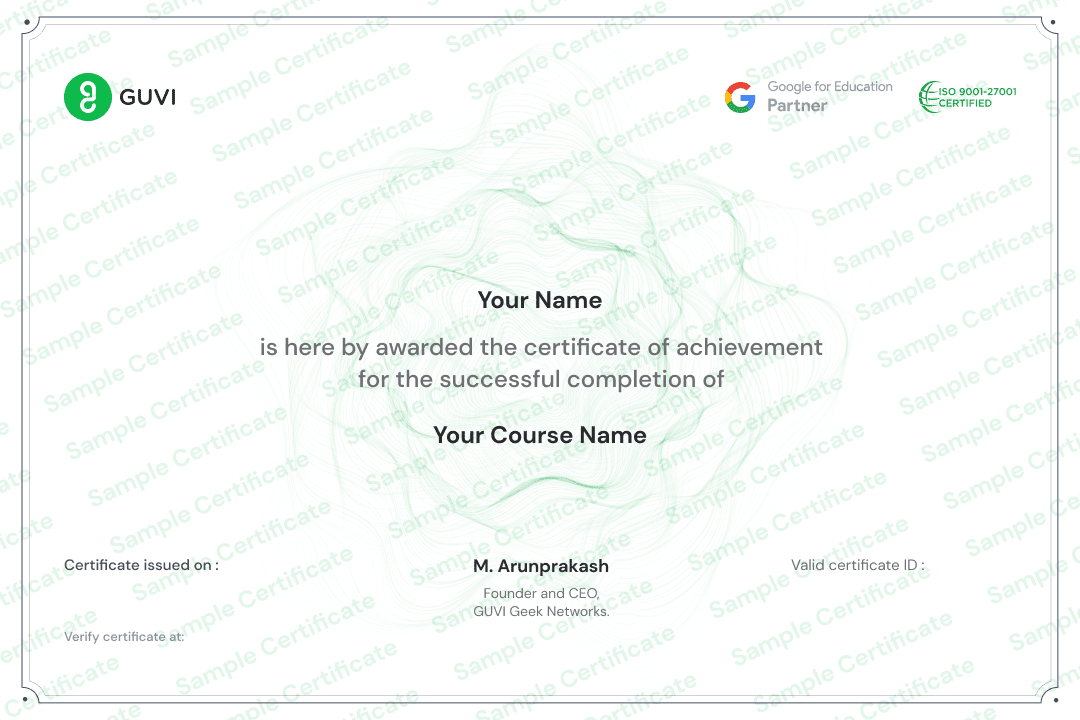
Certificate you will get

Certificate Features

Your certificate can be embedded on your own website or shared on social networking sites like LinkedIn.
Employers can verify the legitimacy of each certificate using the special verification URL that is included with it.

Pre Requsites

After this Course

Course is for

No results found.

FAQ's

The course focuses on Philosophy, Science and Religion: Religion and Science. It covers fundamentals through interactive modules designed for s.
The course offers over 26 hours of recorded content.

Yes, upon completing the course, you will receive a certification

The course is currently available in .

The course is accessible on both web and mobile platforms.

The original price of the course is ₹, but it’s currently available at a discounted price of ₹.
To purchase this course you can click on the Enroll Now button it will redirect you to course page, and on that page you can buy Philosophy, Science and Religion: Religion and Science course.


Similar Courses

Share this course within your network

WhatsApp
Facebook
Telegram
LinkedIn
Threads
X

Page Link